Why You Can't Decide on a Career Change (After Years of Thinking About It)

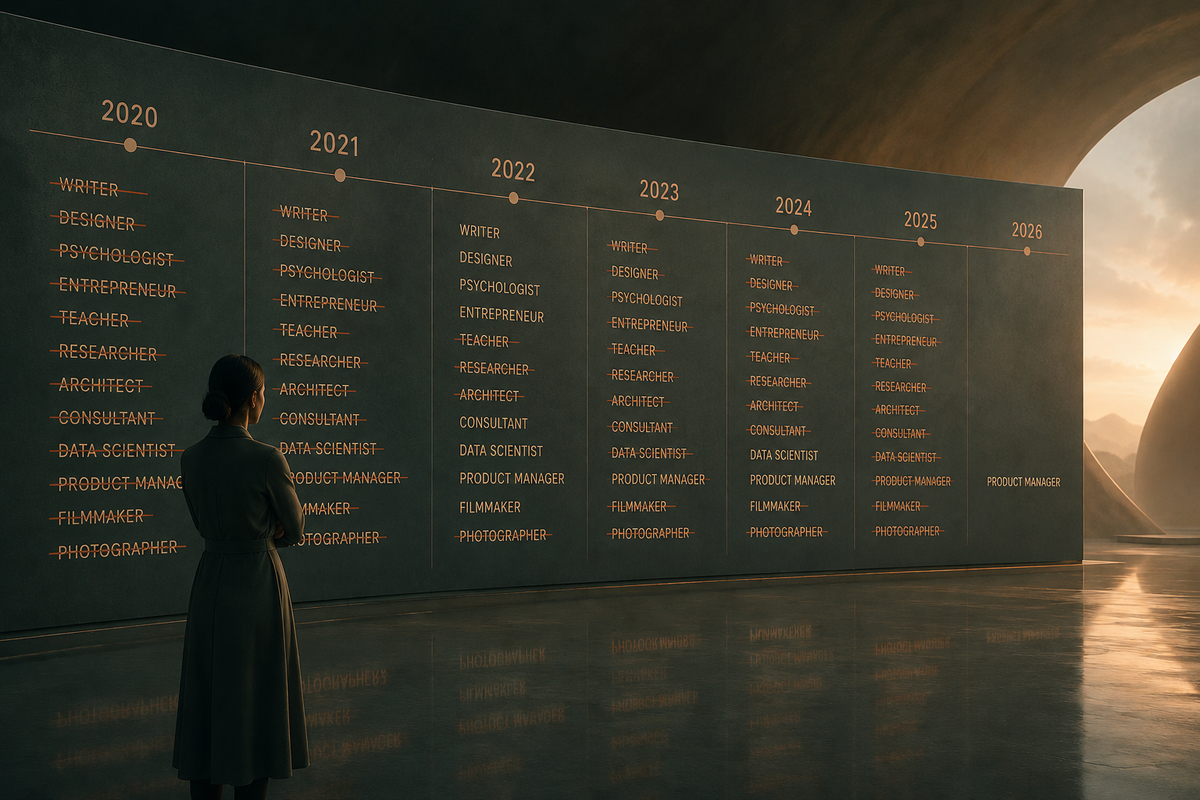
You started thinking about changing careers a while ago. A year, maybe two. Maybe longer than you'd admit to anyone who asked.
At some point you stopped mentioning it. The conversations got repetitive. Friends gave the same advice. You gave the same reasons for not acting. Eventually you stopped bringing it up, and the thinking moved somewhere quieter. It's still there. You know it's still there. You just stopped expecting it to produce an answer.
The thing that bothers you most is probably the duration. You've made a kind of peace with the indecision. What you can't get past is how long it's been going on. Other people seem to know what they want. Other people seem to make the change, or make peace with staying. You've done neither. And the longer it goes on, the harder it is to take seriously. A year of career indecision sounds like a phase. Five years sounds like something else.
Those years were not empty.
What you did while you weren't deciding
You tried things. You read job descriptions and felt your attention sharpen on some and slide off others. You had conversations with people in different fields and noticed which ones left you curious and which left you relieved that you don't do their work. You sat through enough of your own days to develop a precise understanding of what drains you, even if you've never written it down.
You also ruled things out, often without noticing. Options that seemed viable two years ago don't show up in your thinking anymore. You stopped considering them. No formal decision was involved. Something about them stopped fitting. The version of you that was interested in that particular path has moved on, even if the rest of you hasn't caught up.
This is information. Specific, hard-won, accumulating over time. It does not look like progress because it does not look like a decision. You have no announcement to make, no resignation letter drafted. Measured against those outcomes, the years look wasted.
Measured against what you actually know now compared to when you started, they look different.
The accounting problem
You are keeping score the wrong way.
The only metric you're using is "do I know what to do next." By that measure, you're no further forward than you were three years ago. The score is still zero.
The problem with that metric is that it's binary. You either know or you don't. There is no credit for partial progress, no recognition of the ground you've covered. Every insight, every ruled-out option scores exactly the same as total ignorance: zero.
Count the options you no longer consider and the conditions you've identified as non-negotiable: the salary floor, the commute limit, the kind of management you will not tolerate again. Count what holds your attention when you're not trying to pay attention. What you actually find yourself reading about, returning to.
That tally is not zero. If you've been thinking about this for years, it's substantial. You have a detailed picture of what doesn't work and a rougher but real picture of what might. You've been building it this whole time. You just haven't been reading it.
The Exploration Trap
The list keeps growing.
You've been researching career options for months. Each round of research adds another possibility and closes none. There's a name for that pattern. This free 4-page guide explains why it happens and what shrinks the list.
Free PDF. Yours in under a minute.
Why it doesn't feel like progress
Two reasons.
First, career advice frames the starting point as a blank slate. "What do you want to do?" assumes you're beginning from nothing. If you take that framing seriously, all the knowledge you've accumulated over years of thinking doesn't count. It's not an answer to the question, so it registers as irrelevant.
Second, elimination is invisible work. Adding something to your list feels like a step forward. Removing something feels like you've got nowhere, or worse, gone backwards. You started with ten vague possibilities and now you have four clearer ones, and that feels like shrinkage when it's actually refinement.
The years of thinking narrowed the field, whether you were aware of it or not.
What you have and what you're missing
The duration that embarrasses you is the same thing that makes your position strong. Six weeks of thinking gives you instincts. Years of it give you data. You know which environments drain you because you've tested that over hundreds of working days. You know what your non-negotiables are because you've bumped up against every one of them.
What you haven't had is a reason to trust any of it, or a structure for organising what you know into a form that produces a conclusion.
You've been deciding, in fragments, for years. If one of those decisions already happened and didn't hold, the second one is not a reset. The remaining question is what to do with all the fragments you've collected.
You have more than enough to work with.